
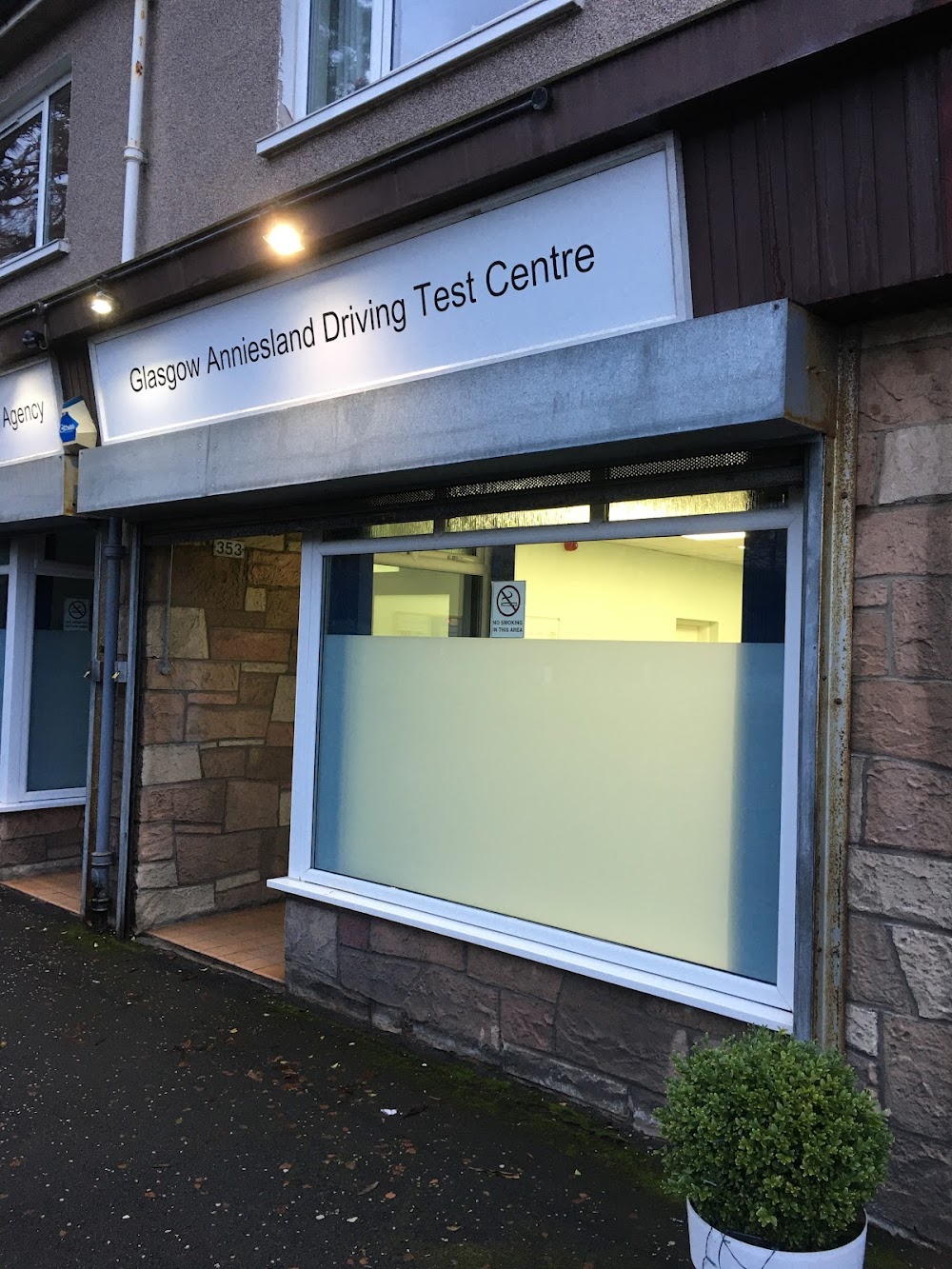
What is Anniesland test centre like?
Anniesland is the sort of test area where I wouldn't want a pupil spending their last few lessons trying to memorise a route. Older published route material is useful for identifying the local road network worth practising — for example Anniesland Road, Great Western Road, Crow Road, Knightswood Road, Southbrae Drive and the Canniesburn/Blairdardie side — but the examiner chooses the drive on the day. I want the pupil recognising the road in front of them and making the right decision, not waiting for the next turn they've memorised. The bigger advantage is knowing the character of the area. You can go from busy traffic around Great Western Road and Anniesland Cross into quieter residential streets fairly quickly, so you need to be able to change the way you're driving to suit the road in front of you.
For me, the main thing is getting a pupil comfortable with making decisions. On the busier roads that means getting your lane sorted early, reading signs and keeping up with the traffic when it's safe. Once you're into the residential areas it becomes more about observations, meeting traffic, parked cars and not switching off because the road looks easier. Southbrae Drive, Westbrae Drive, Westland Drive and the streets around Jordanhill are good places to practise that properly. If the parked vehicles are on your side and an oncoming car is already committed, don't try to squeeze through. Come off the gas early, choose a sensible place to hold back and make your intention obvious. When the gap clears, check again and move on positively rather than creeping along beside the parked cars.
Anniesland driving test pass rate
Anniesland recorded a 44.3% pass rate in 2025/26, with 2,736 passes from 6,170 tests. I wouldn't choose a test centre just because of its pass rate. The standard of the driving test is the same wherever you sit it. What the figure does give you is a bit of context: Anniesland is a busy Glasgow test area and you should expect to show that you can deal confidently with a proper mixture of traffic and road types.
Where can the Anniesland driving test go?
There isn't one fixed Anniesland test route, and that's worth understanding before you start practising. Depending on traffic and the direction you're taken from the centre, you can find yourself around Anniesland Road, Great Western Road, Crow Road, Bearsden Road, Southbrae Drive, Blairdardie and the Knightswood side of the area. Tests can combine busy main-road driving with quieter streets where the examiner can see how well you deal with junctions, parked cars and meeting traffic. Older published Anniesland route material repeatedly links roads such as Knightswood Road with Great Western Road, and Crow Road/Bearsden Road with Drymen Road, Canniesburn Road and Blairdardie. I use that as a guide to the sort of local road network a pupil should be comfortable with, not as a promise of the route an examiner will take. Around Knightswood in particular, don't confuse being cautious with being hesitant: if you've made the observations and a safe gap is there, use it. Sitting at a junction waiting for an empty road can be just as poor a drive as rushing into a gap that isn't there.
I would practise the area rather than one supposed route. If you can drive the main roads properly and you're comfortable when you're taken off them into residential streets, you're in a much better position if the examiner takes you somewhere you weren't expecting.
Great Western Road
Great Western Road is one of the roads I'd want a pupil to be comfortable on before an Anniesland test. On the approach to Anniesland Cross, don't leave the lane decision until the last few car lengths. Read the overhead and road markings while you've still got space, check mirrors and move into the lane for your direction in good time. If you've left it too late, don't cut across another lane just to obey an instruction — stay safe and follow the lane you've got. Once you're through the busy junctions and the road opens up, this is also where I want a pupil to make sensible progress: if the limit, traffic and conditions allow it, don't sit well below the pace simply because it's a test. There's a lot going on: traffic, lane choices, buses, changing traffic conditions and junctions coming up fairly quickly. Don't stare at the car in front. Keep looking well ahead so signs, lights and lane markings don't come as a surprise.
One thing I regularly work on with pupils is making progress without rushing. Great Western Road is a good place to practise making progress properly: once you're clear of the junction, the road ahead is open and conditions allow, build your speed smoothly towards the appropriate limit instead of hovering well below it because you're nervous. Around Knightswood, the same principle applies at junctions — if you've looked properly and the safe gap is there, take it. Being over-cautious isn't automatically safer. If you've got a safe opportunity to go, use it. Equally, don't let a car behind pressure you into a gap that isn't yours.
Anniesland Cross and the busier junctions
At Anniesland Cross and the bigger junctions around the area, get the basics done early. I would practise approaching the Cross from more than one direction rather than teaching a pupil one memorised lane. The important habit is to identify the direction, read the arrows and lane markings early, check the mirrors before changing position and be settled before the junction. If the markings don't match what you expected, follow what is actually on the road — not what you remember from the previous lesson. Read the signs, know which direction you're going and get your lane sorted before you arrive at the junction. Last-second lane changes are where pupils can turn an ordinary situation into a difficult one.
If you realise you're in the wrong lane, don't panic and cut across. Deal safely with the lane you're in. An examiner can redirect you; they can't ignore an unsafe lane change.
Crow Road, Bearsden Road and Southbrae
These roads give you a different feel again. I would be looking for good forward planning, sensible positioning and proper observations rather than driving on autopilot. As you move between the main roads and the side streets, keep checking the speed limit and don't carry main-road speed into an area where the road conditions have changed.
Residential roads around Blairdardie and Knightswood
This is where some pupils relax too much. Quiet doesn't mean easy. Parked cars can narrow the road very quickly, sight lines at junctions can be restricted and you may have to decide who should go first when meeting another vehicle.
My advice is simple: don't force a meeting situation. If the obstruction is on your side and there's a sensible place to hold back, use it. Look well ahead and make the decision before both cars end up nose to nose.